

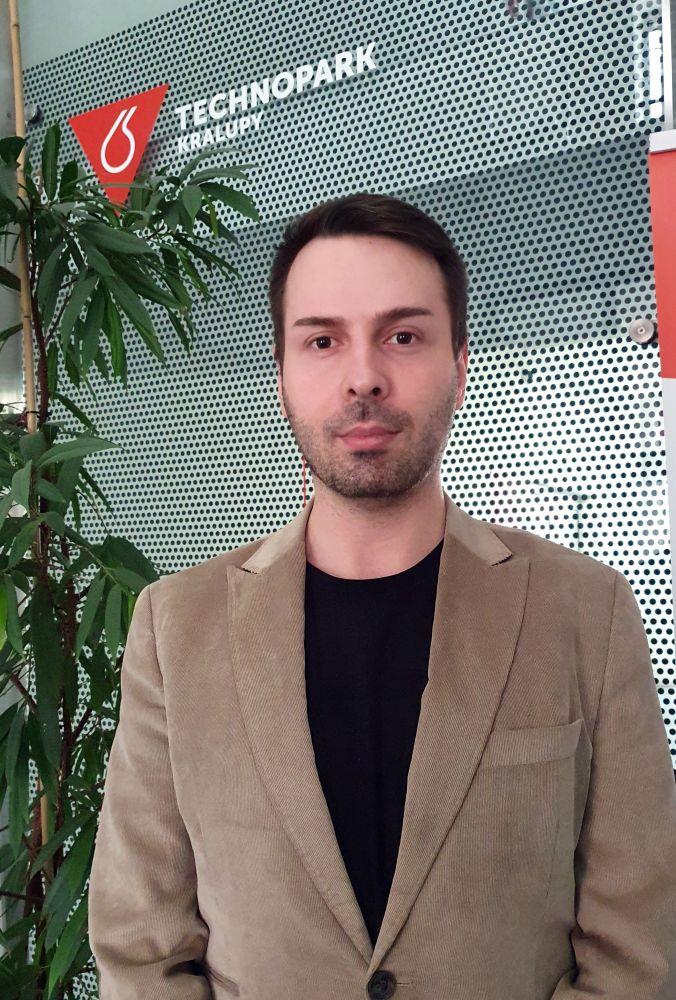
Our research team grows
- How did you learn about our group? How did you get here?
My first acquaintance with The GreenCats Research Group happened several years ago when Oleg Kikhtyanin had a business visit to Boreskov Institute of Catalysis (BIC) where I had been working for 10 years. He described the scientific directions and achievements of The GreenCats Research Group, which of course aroused great interest for the researchers from Russia. This meeting became the basis for joint research and the submission of a joint application from The Research Group of Assoc. Prof. David Kubicka from the UCT Prague and the laboratory of Prof. Vadim Yakovlev from BIC. Subsequently, David Kubicka invited me to join the group to continue the research under a joint Czech-Russian project.
- What is your project at UCT about?
My research work in UCT is under several directions. The first one is simultaneous deoxygenation of acids and phenols in pyrolyzed wastewater sludges in the frame of a joint Czech-Russian project. Sewage sludge (SS) from municipal and industrial wastewater treatment plants could be used for the production of pyrolysis liquid (PL-SS). Currently, the sewage sludge is primarily disposed of via landfilling and incineration that are not environmentally friendly methods due to the high concentration of potential carcinogens (heavy metals, dioxins, pathogenic microbes, etc.) in SS. That is why the pyrolysis of the SS followed by PL-SS processing is of great importance for environmental protection issues of SS utilization. The high content of organic components makes SS an attractive feedstock for the fuel and energy sector. Catalytic hydrotreatment of the model compounds of PL-SS (acids and phenols) is of particular interest to reduce the oxygen content in PL-SS. This process presents a key step to obtain a new generation of biofuels and eco-chemicals. Within the second direction, I carry out the development of catalysts for the efficient transformation of vegetable oil to clean fuels jointly with Heilongjiang University, China.
- What is your previous experience?
I had been working at the Laboratory of catalytic processing of renewables at Boreskov Institute of Catalysis from 2010 to 2020. I obtained my Master of Science in Chemistry (Catalysis and Adsorption) in 2012 at Novosibirsk State University (Novosibirsk, Russia). In 2016 I received a PhD degree with the thesis “Hydrodeoxygenation of model compounds of renewable fuels over catalysts based on Ni-containing alloys and carbides”. I actively took part in different Russian and international projects aimed at research and development of catalysts for hydrotreatment of pyrolysis liquid and its model compounds. The study of catalysts focuses on the understanding of the fundamental principles of the catalytic action on a wide range of organic oxygen compounds. The specific task in the framework of the scientific interests is the development of new types of catalysts modified by different additives to improve their activity and stability in pyrolysis liquid upgrading. I have experience in supervision of Russian and foreigner masters and PhD student.
- What is your experience with living in the Czech Republic?
My first visit to Prague was in 2019. And I was delighted with the beauty of the city and its unique atmosphere. Despite the fact that all public places are closed now, I am glad that I can enjoy the beauty of the city without a lot of tourists. One of the advantages of the city is that most of the people in Prague speak English or Russian, which helps me in socialization.